7 Reasons CSW70 Matters for People-Centered Justice
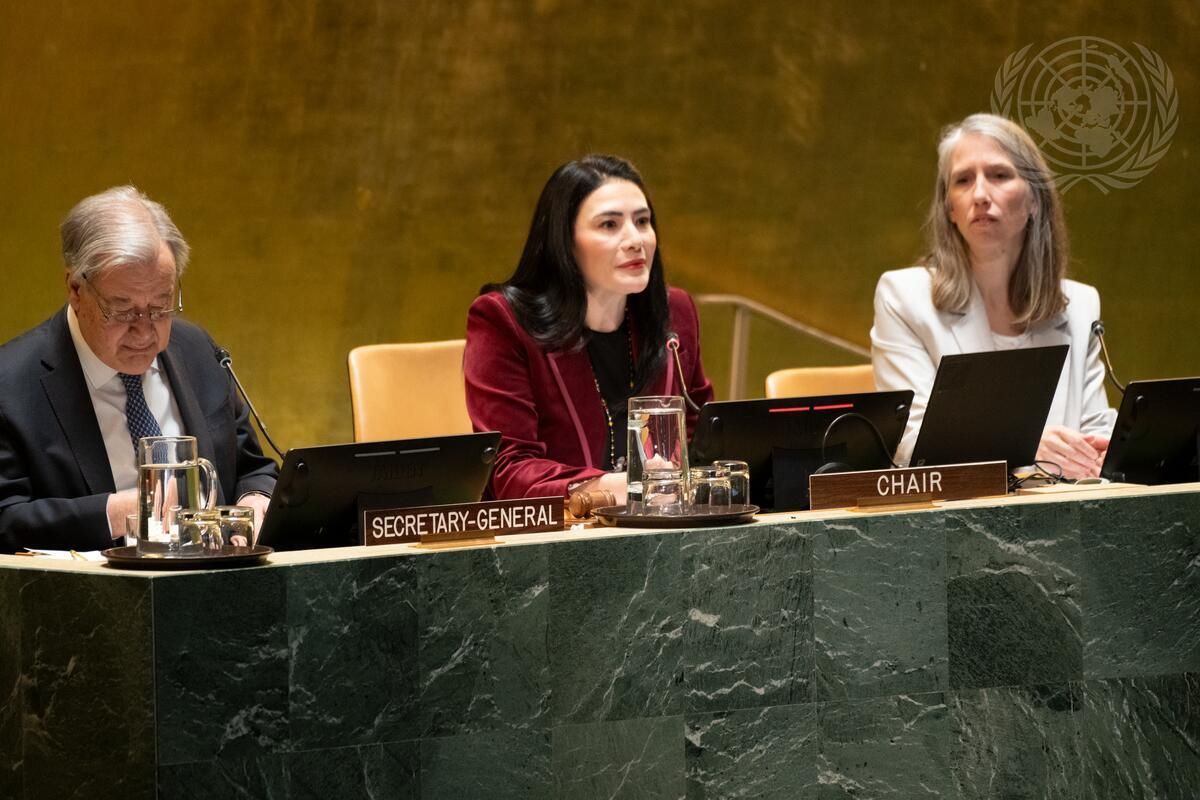
By Fernando Marani, Program DirectorPathfinders’ Justice for All program has long argued that closing the global justice gap requires a fundamental shift: from systems built around institutions to systems built around people’s justice needs. In line with the priorities set by the Justice Action Coalition (JAC), CSW70’s agreed conclusions advance, validate, and accelerate this idea across seven dimensions while providing clear guidance to governments and the United Nations system:
1. Justice systems must be built around people’s lived realities, not institutions
The conclusions acknowledge that justice systems too often “do not fully reflect or respond to the lived realities and needs of all women and girls.” They call for institutions that are accessible, timely, affordable, and solution-oriented, and explicitly grounded in international human rights law and the rule of law. This is the definitional foundation of people-centered justice: start with what people actually need, not with what the formal system can offer. CSW70 makes this a mainstream intergovernmental standard, not just a reform aspiration.
2. Financial, geographic, and procedural barriers to justice must be actively addressed
CSW70 calls on member states to waive fees, provide affordable services to increase legal literacy, simplify administrative and legal procedures, and consider mobile, community-based, and decentralized justice services, including mobile courts, e-courts, and one-stop centers, to overcome geographic barriers that disproportionately affect women in rural, remote, and crisis-affected areas. This moves well beyond formal legal reform: it demands that governments redesign delivery systems so that justice is present where people actually live.
3. People-centered justice demands people-centered data
The conclusions call for investment in national statistical systems, justice-sector disaggregated data, and evidence-based, data-driven policy formulation to monitor progress on achieving justice for all women and girls. This aligns with the idea of measuring the justice gap from the perspective of people’s lived experiences, and satisfaction, not just court caseloads or legislation passed. CSW70 also calls for global and regional repositories of data on all forms of violence against women, including femicide, contributing to advance comparable, accessible data that could help identify best practices.
4. Justice must be financed as a public good with people at the center
The conclusions call for gender-responsive budgeting, adequate and sustainable funding for justice facilities and services, dedicated reparations funds for survivors of violence, and sustained, flexible, multi-year funding for civil society organizations engaged in access to justice work, alongside protection of civic space. People-centered justice cannot be delivered on the margins of public budgets or through short-term project funding. CSW70 makes the case for justice financing in line with components of the JAC’s Justice Financing Framework, securing more money for justice and more justice for the money.
5. Free and accessible legal aid is affirmed as a right for all women and girls
The conclusions call for timely, accessible, effective, adequate, affordable, or free legal aid services for all women and girls, including those living in poverty and in detention, with specialized lawyers and trained personnel, drawing on bar associations, law schools, public interest law firms, and civil society. By framing legal aid as a right for all women and girls, and calling for its availability across a wide range of providers, CSW70 treats legal aid as an essential public service and a key component of advancing people-centered justice.
6. Community paralegals and legal empowerment workers get recognition
The conclusions call on governments to formally recognize non-lawyer community justice workers and paralegals within national legal frameworks, with appropriate oversight, and to support community-based legal empowerment approaches that build women’s and girls’ knowledge of their rights and available remedies. This is a validation of the idea that justice doesn’t begin at the courthouse but in communities, with people who understand their rights. Billions of people face justice problems they cannot resolve. Paralegals and community justice workers are often the only realistic bridge, and CSW70 put the spotlight on their contributions.
7. Justice requires a coordinated government, not institutions working in isolation
The agreed conclusions call for accountable, whole-of-government justice strategies that integrate ministries and entities involved in the policy development, administration, and delivery of justice and protection services for all women and girls. It also explicitly stresses the importance of creating victim and survivor-centered pathways and referral mechanisms involving law enforcement, courts, prosecution, legal aid, labor inspection, child protection, healthcare, and social services. This is the governance architecture that people-centered justice demands: no single state actor can meet all of a person’s justice needs, so systems must be designed to work together.
What This Means for People-Centered Justice
Taken together, these seven dimensions constitute the most comprehensive intergovernmental endorsement to date of the people-centered justice agenda for women and girls. They reflect a growing recognition that barriers to justice are multidimensional, requiring coordinated responses across legal, social, and economic systems. CSW70 did not just reaffirm access to justice as a human right, it specified the mechanics to make it a reality. By identifying concrete areas for action—from legal empowerment and legal aid to financing mechanisms and institutional reform—the outcome provides a clearer framework for governments and partners seeking to operationalize these commitments.
The work now is to ensure that these commitments translate from agreed text into national budgets, justice delivery reforms, and people’s lives. This requires sustained political commitment, adequate financing, and collaboration between governments, civil society, and international partners. Pathfinders’ Justice for All program, through its role of Secretariat of the Justice Action Coalition is positioned to support exactly that transition. By convening stakeholders, supporting implementation efforts, and promoting people-centered justice, the program aims to help ensure that the momentum from CSW70 leads to tangible improvements in access to justice for women and girls.
This piece had contributions from Themba Mahleka and Laura Ospina.
Related Resources