Workstream I: Data and Evidence
The Justice Action Coalition Workstream I on Data and Evidence aims to strengthen the global knowledge base for the justice sector by improving the availability, quality, and comparability of data and evidence on people-centered justice.
About the Workstream
The workstream is led by the OECD, and implemented in close collaboration with the World Justice Project (WJP) and the Hague Institute for Innovation of Law (HiiL), the workstream supports the Justice Action Coalition (JAC) in addressing the global justice gap that affects an estimated 5.1 billion people worldwide.
Effective justice reform depends on the ability of governments to understand legal needs, measure outcomes, and assess whether justice systems are delivering fair, timely, and accessible solutions. Yet justice data remains fragmented, inconsistent, and often disconnected from policy and budgeting decisions.
The Data and Evidence workstream responds to this challenge by advancing three interrelated objectives:
- Developing a robust measurement framework and internationally comparable indicators for people-centered justice;
- Strengthening the economic case for investing in accessible and effective justice systems;
- Fostering collaboration, capacity-building, and shared learning to improve justice data and evidence globally.
Together, these efforts aim to support governments, practitioners, and partners in making justice systems more responsive, accountable, and people-focused.
Fact Sheets
-
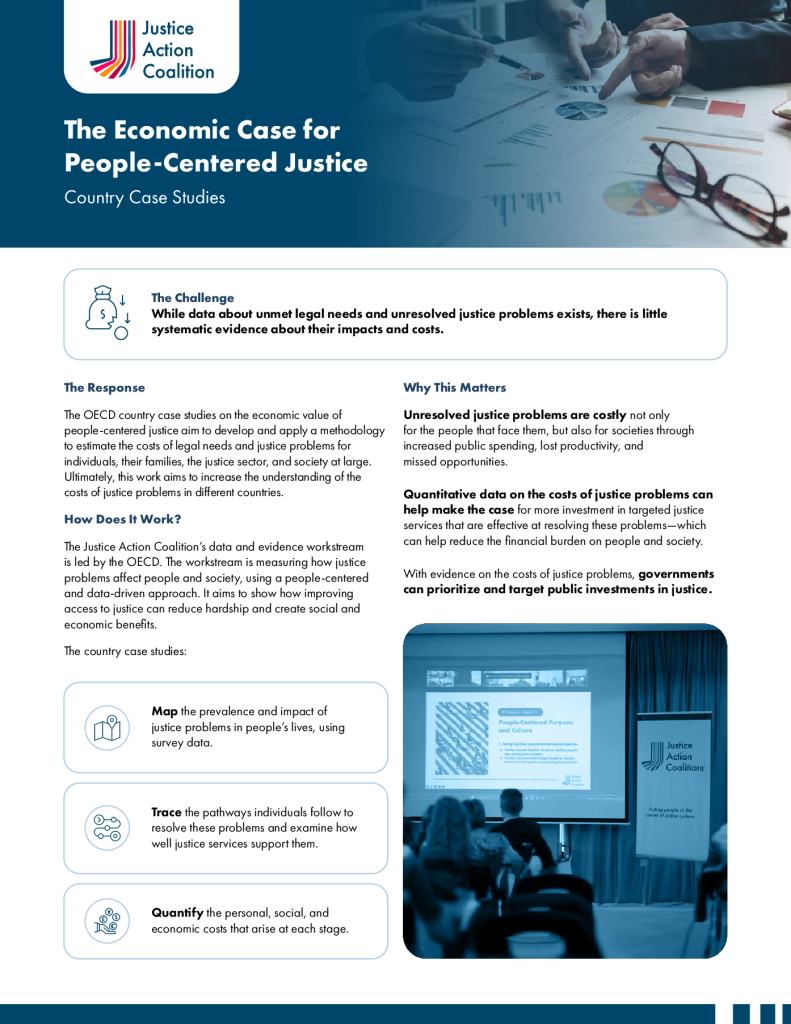
The Economic Case for People-Centered Justice Fact Sheet This fact sheet gives a high-level overview on how Justice Action Coalition country case studies on the economic value of people-centered justice
-
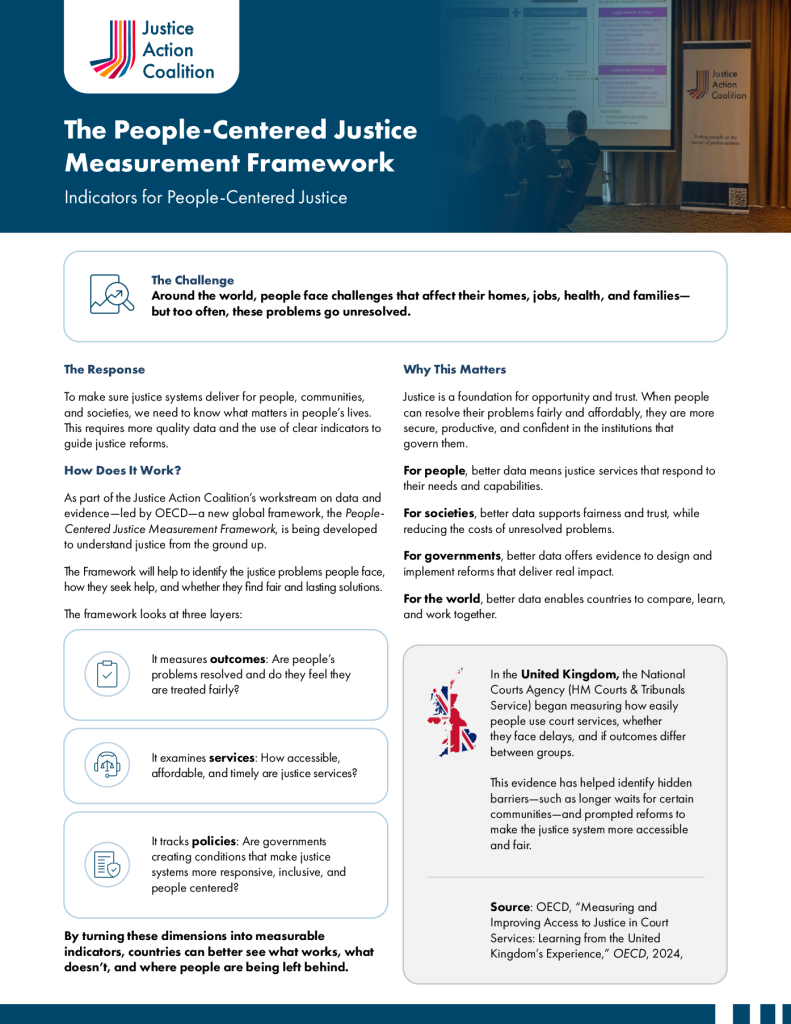
The People-Centered Justice Measurement Framework Fact Sheet This fact sheet gives a high-level overview on how Justice Action Coalition is developing a new global framework—led by OECD—to understand justice from the ground up.